Valuation · 14 May 2026 · 10 min read
Prague Apartment Building Values: A Realistic Valuation
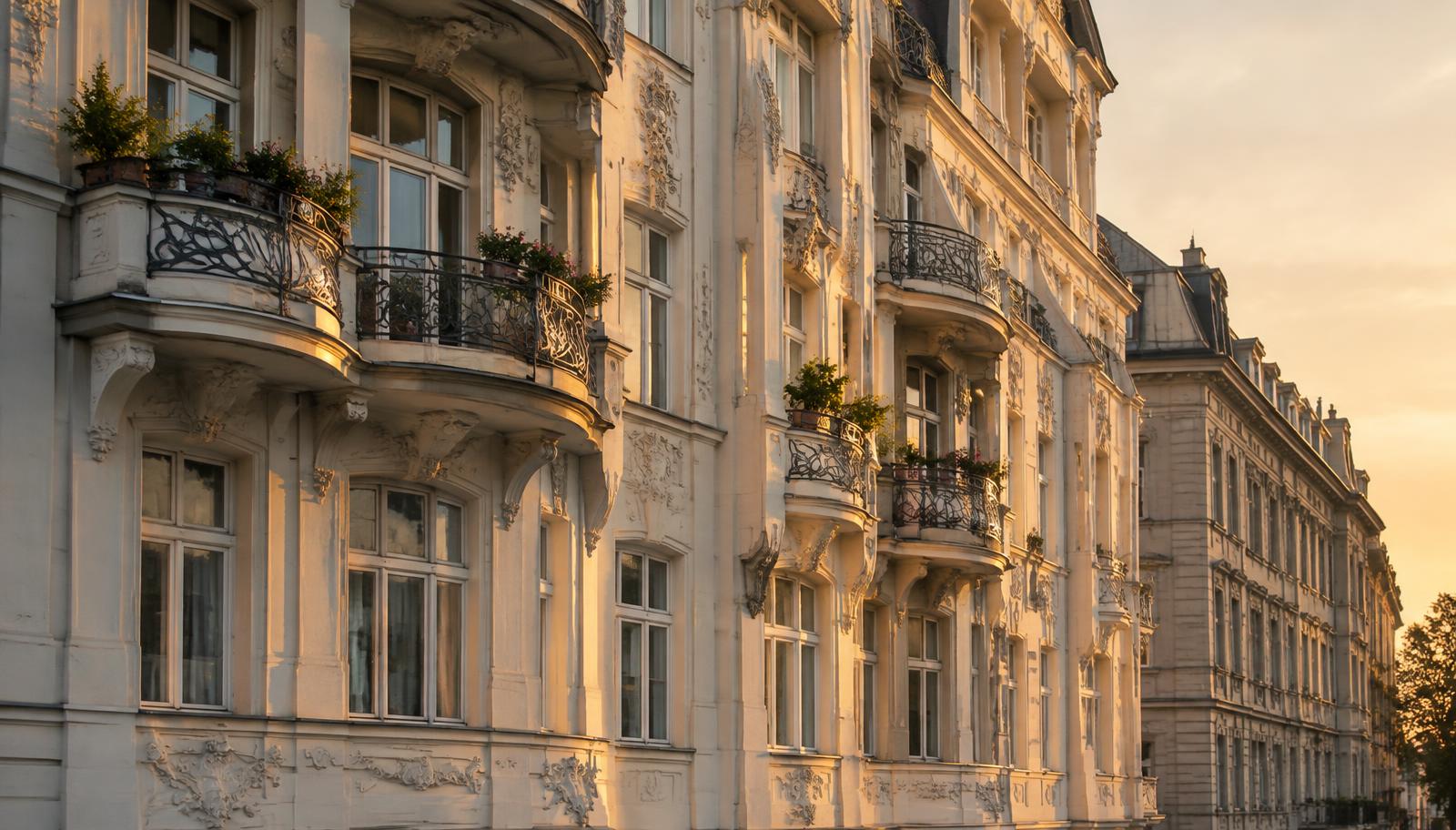
The question we hear most often is: “What is my building actually worth?” Owners usually multiply the total floor area of their flats by a price per square metre from Sreality and arrive at a figure that is tens of per cent off the mark. Not because their arithmetic is wrong, but because an investor is buying a different product from someone buying a flat.
Why multiplying floor area by a flat’s price per m² is not enough
The price of an individually owned flat reflects work already done for the buyer: legally dividing the building into units, refurbishment, securing vacant possession, mortgage arrangements and selling costs. An investor buying the entire building still has to pay for these steps and bears the associated risks, including periods when the building generates no income.
A building with 1,500 m² of residential floor space therefore cannot be valued as 1,500 m² of new flats. In Prague, the difference between the “sum of the flats” and the value of the whole building is typically 25–45%, depending on its condition, tenancy arrangements and whether it has already been legally divided into units.
Three approaches that inform the valuation
A robust valuation does not rely on a single perspective. It combines three approaches and explains how the resulting value has been reached:
- Income approach: net operating income (NOI) divided by the required yield. For Prague apartment buildings, required yields range from approximately 3.5 to 5.5%, depending on location and risk.
- Development approach (residual): the value of the completed flats following refurbishment and any additional storeys, less costs, financing, an allowance for time and a reasonable investor’s profit.
- Comparable approach: actual completed building transactions, not asking prices, expressed per m² and adjusted for differences in condition and rents.
What a valuation must include
If someone gives you a single figure without a calculation, you have received an opinion, not a valuation. A realistic valuation includes:
- a rent roll listing flats, commercial premises, floor areas, rents and lease expiry dates,
- the building’s operating costs for the past 2–3 years and an NOI calculation,
- an estimate of required capital expenditure on the roof, façade, building services, lift and windows, distinguishing between essential and value-enhancing works,
- untapped potential, including attic space, commercial premises and combining or subdividing flats, with an assessment of how realistic it is,
- a sensitivity table showing how the value changes with different required yields or rental levels,
- a price range rather than a single figure, and an explanation of which type of investor would be willing to pay at the upper end.
What increases a building’s value and what reduces it
Factors that increase value include: a desirable address and street, a higher proportion of market-rent tenancies or flats likely to become vacant in the foreseeable future, a lift or scope to install one, good-quality ground-floor commercial premises, demonstrable attic conversion potential and a clear legal position.
Factors that reduce value include: long-term tenancies at rents well below market levels, unknown building condition, including damp, structural issues and roof timbers, disputes between co-owners, easements, unresolved issues concerning courtyard structures, or uncertainty over whether the building is in a conservation zone or is a listed cultural monument, and what that entails.
Why a valuation matters before the first negotiation
A valuation is not just information for your own use. It gives you evidence to support your position in negotiations. An owner who knows their NOI and the building’s capital expenditure requirements is not easily pressured into accepting a discount on the grounds of “poor condition”. An investor presented with well-prepared documentation will also factor in a lower risk premium.
We recommend obtaining a valuation before entering into discussions with anyone. Otherwise, the first offer an owner hears can unconsciously become an anchor, and that anchor is usually set to the seller’s disadvantage.
Frequently asked questions
How much does an apartment building valuation cost?
A formal expert valuation report for banking or court purposes in Prague typically costs tens of thousands of CZK. For owners we work with, we prepare a market analysis to inform the decision to sell as part of the sale preparation process.
Is a formal expert valuation the same as the market price?
Not necessarily. A formal expert valuation report is often used for tax, banking or court purposes, and its methodology may not reflect what investors will actually pay in a competitive bidding process.
Why have two valuers given me different figures?
Most often, this is due to different assumptions about the required yield and estimated capital expenditure. That is why you should ask to see the calculations: only then can you compare the figures.
Next step
Send us the address and basic details of your building. Within a week, we will personally explain its likely price range and the reasons behind it.
Sources
Author: Michal Kopřiva, Pura Vida Property Advisory. Published 14 May 2026 · updated 19 October 2026. This article is for information only and does not replace legal or tax advice.